Lifelines: The Black Book of Proverbs
Showing posts with label courage. Show all posts

Friday, July 23, 2010

The courage to ask "why"


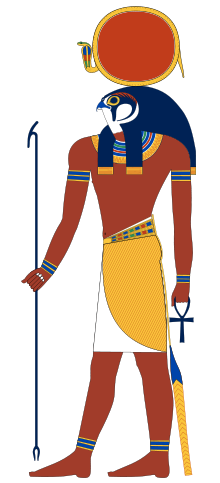
This is Ra, the Egyptian Sun God. May we keep seeking to know so that, like the sun, our light can keep shining.


He who knows nothing, doubts nothing. (Brazil)

Dear Zayda,

As soon as you have enough words, you will begin to ask “why”. I hope nothing stops you from continuing to ask “why”. I can think of no way to increase what we know, other than asking questions about what others tell us.

Still, my grandniece, you will find that “why” questions will get you into trouble at school and later on the job. I hope your parents encourage your questions so you never get in trouble at home for wanting to know more.

When I was growing up, children were supposed to be seen and not heard. For sure, they were not to ask questions of adults. Today, too many adults still try to be seen and not heard, unless they are accepting all they hear, and doubting nothing.

“Why” questions can be scary for adults. They may have to think thoughts that they hide from themselves, or they may have to re-think what they believe to be true.

You may find that some questions are taboo – questions about sex and religion. And questions about politics. When I was a child and my dad was active in politics, it was a lot easier for me to dislike the side he thought was wrong. So I grew up believing that side had no sense and would beat up people who didn’t support them. I also believed that side was made up of rich people who cared only about getting richer, and poor people who didn’t mind if the rich people made them poorer.

My dad was about seventy years old when he was first able to face himself with “why:” questions. He knew enough about his political party to start doubting them. Then he asked even more “why” questions and decided that his party was no longer good for Jamaica. It took him longer to decide to vote for the party he disliked all his life.

Sex brought us all here, Zayda, but this is one area where you might find the most blocks to “why” questions. I tried to answer my sons’ questions about sex, but sometimes I would feel confused about what to say, and want to distract my sons. Sometimes adults get cross as a way of avoiding answers that they may not have or may not know how to give. So I talked with my sons about babies. It was easy to talk about babies being in their mummies’ tummies. But it was not so easy to answer how and why the babies came about.

Religion can be another area where questions are not allowed. “Why” questions about God means doubts, and for many church people doubts about God are not allowed. Be warned, one of the questions not to ask is, “Why does God allow bad things to happen?” I am sure you will think of your own why questions, and I am sure your mummy and daddy will answer them for you. But they may also warn you not to ask those questions around some family members.

Hopefully, you will feel so free to ask your “why” questions that you will ask them anyway, and let the adults take care of their own fears and doubts. I am sure, also, that your questions will help adults to know more. And perhaps to doubt more.

Blessings,

Your shangazi

Monday, July 19, 2010

Replacing fear and hate with courage


This Adinkra symbol is "Akofena". These two swords represent courage.


That which you fear most is likely to occur; the one you hate the most is likely to take over. (Ethiopia)

Dear Zayda,

If this Ethiopian proverb is right (and I think it is), we seem to be building up a lot of trouble in Jamaica right now. Whatever we fear and whomever we hate has power over us. On the other hand, faith and love have power beyond what we can imagine. Our strength comes from the courage to think our way to solutions, rather than simply react to problems.

People in Jamaica seem to fear crime so much that they don’t want to look at it. And if you don’t look at something, you can’t solve it. In fact, looking at something puts you have way toward solving it since you know what you are dealing with. Or at least you are willing to see what the problem is.

So at this moment we have a State of Emergency that has gone on for almost two months. The government is likely to renew this State of Emergency this week, and seem likely to continue renewing it for the rest of the year. The police like it, business people like it, people uptown and downtown seem to like it, and I can think of few people who think it should end now. But sometimes, Zayda, we have to stand up for what we believe even if we are alone or in a small group. It’s not a question if we are right or wrong, it’s a question of being firm in what we are convinced is true.

I can understand the public response to the State of Emergency, because living with crime and fear of crime can make people so stressed out they get sick. Living that way makes many of us prisoners in our homes and in our cars. We feel we must live behind grills and with our windows rolled up and car doors locked all the time. We panic if we hear a sound at night, even if it is just a neighbour’s cat hunting for mice. If the wind rattles a window we might freeze in our beds. Yes, it is that bad to live in a country with a high rate of crime.

So the State of Emergency gives an ease, at least for a while. However, it is like a band-aid over a broken leg. The State of Emergency gives the police huge powers, so every the police cordon and search areas – they surround a community and block it so people can’t just go in and out as they wish, and then they search for bad men and guns. The police can also arrest as many people as they like, and they don’t need to have a reason. Besides, they can hold the people for months, and they don’t need to charge the people with any offences. So crime is down, mainly because the wrongdoers are laying low for a while. The band aid is on, but the broken leg is not fixed.

At some point, the band aid is going to drop off or be taken off, and then what? That which people fear most is likely to return, perhaps all the worse for being allowed to get worse because we feared it so much we would not look at it and try to deal with it directly. The State of Emergency will end, even though I think there are those who would like it to continue indefinitely, so we never have to start healing what is admittedly ugly to look at.
At this time, people are saying how much they hate criminals. Some would like criminals locked up forever, and many say outright that they have no problem with killing criminals. Others compare criminals to cockroaches or other pests that the country needs to get rid of, even if some innocents die in the process. So, if the Ethiopian proverb is correct, the criminals seem likely to take over when the State of Emergency ends – what we hate most is likely to take over. Worse still, if our fears prevented us from solving the problems that were making people do bad things rather than look to what is good for everyone.

We probably can’t help all of Jamaica to turn from fear and hate, but we can help ourselves. So, my grandniece, let us look at life through the eyes of love. Let us look at people, no matter their actions, through the eyes of love. Love doesn’t mean we allow bad things to happen. Love means we try to prevent the bad things from happening. And if the bad things happen, love means we look for ways to prevent them from happening again. And courage means we take steps that may not make us popular.

Our solutions don’t need to be perfect, since we can keep learning how to do things better. What is important is that, no matter our fears, we keep growing. And loving.

Blessings,

Your shangazi

Akwaaba!

When the occasion arises, there is a proverb to suit it. (Proverb from Rwanda and Burundi)

Welcome to this space where we can talk about proverbs that we can relate to (or not), and proverbs that make sense to us (or not). Most of all we can discuss how proverbs make us think about life and living. We can also share experiences of proverbs that have provided us with lifelines or just the chance to reflect.

Some of the proverbs here may also be found in "Lifelines: The Black Book of Proverbs", published by Random House and authored by Askhari Johnson Hodari and me. The foreword is written by Archbishop Desmond Tutu.

One of the unique features of our book is that we arranged the proverbs according to life cycle, in sections including, Birth, Childhood, Love, Marriage, and Intimacy, Challenge, and Death.

For more proverbs and for information on Lifelines: the Black Book of Proverbs, please visit us at www.lifelinesproverbs.com.

Enjoy!